

Organize Loose Charging Cables at Home

This guide turns a messy pile of charging cables into clear groups. Sort them, check their condition, coil them gently, and separate daily-use cables from backups.
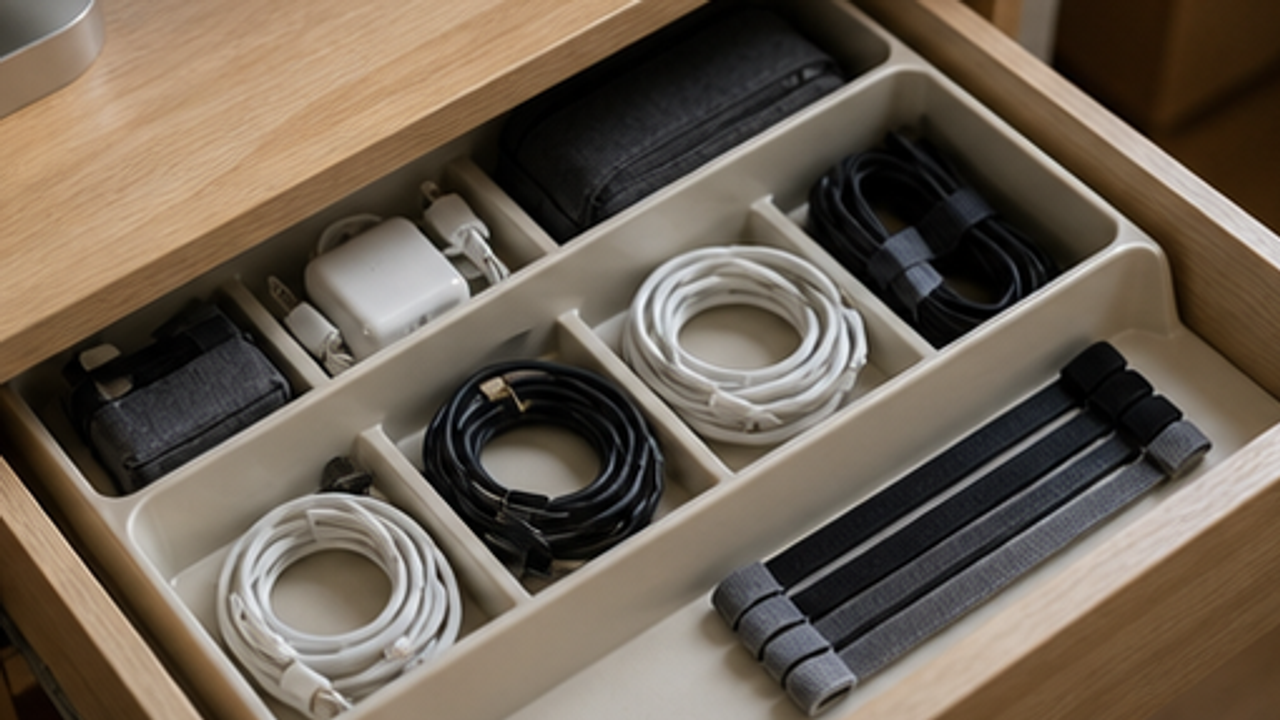
Spread Everything Out
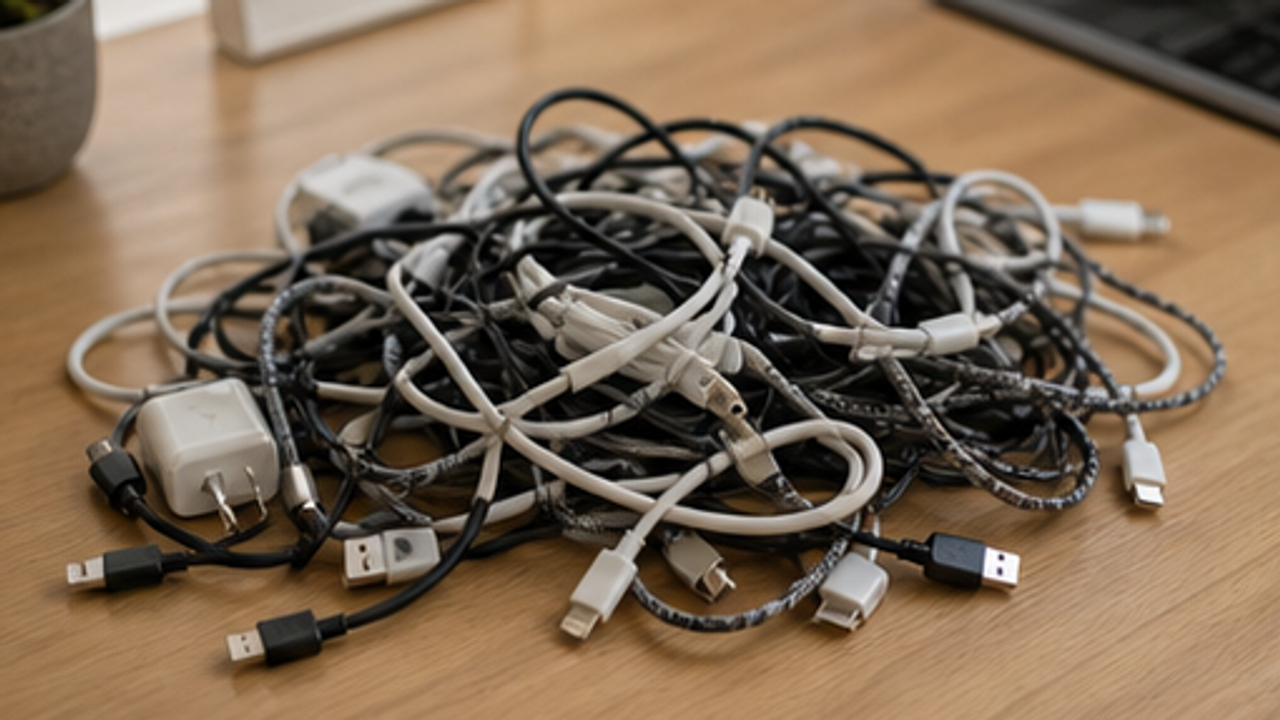
Place loose cables on a table and gently undo obvious tangles.
Seeing all cables at once reveals quantity, connector types, and lengths.
Do not yank tangled cables because connectors can be damaged.
Group by Type and Length
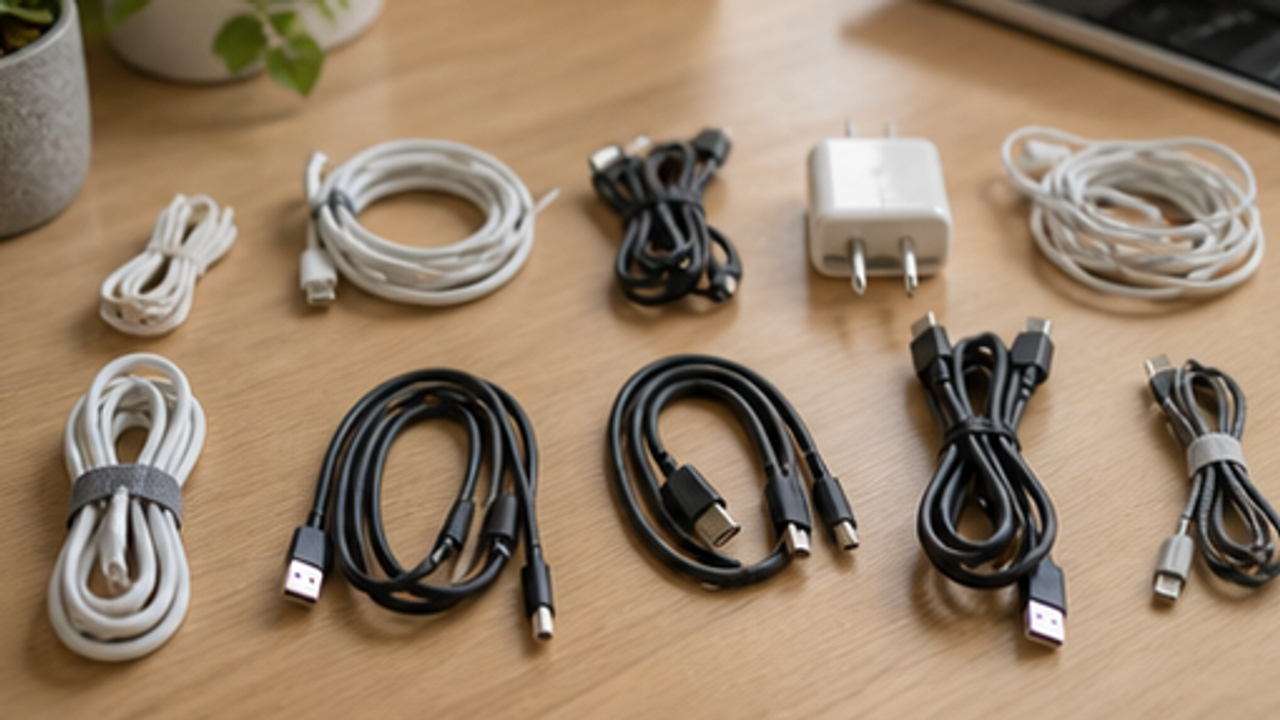
Put similar connectors and similar lengths together.
Grouping prevents duplicate purchases and helps match each cable to a location.
Do not rely only on appearance; keep special device cables separate.
Check for Damage
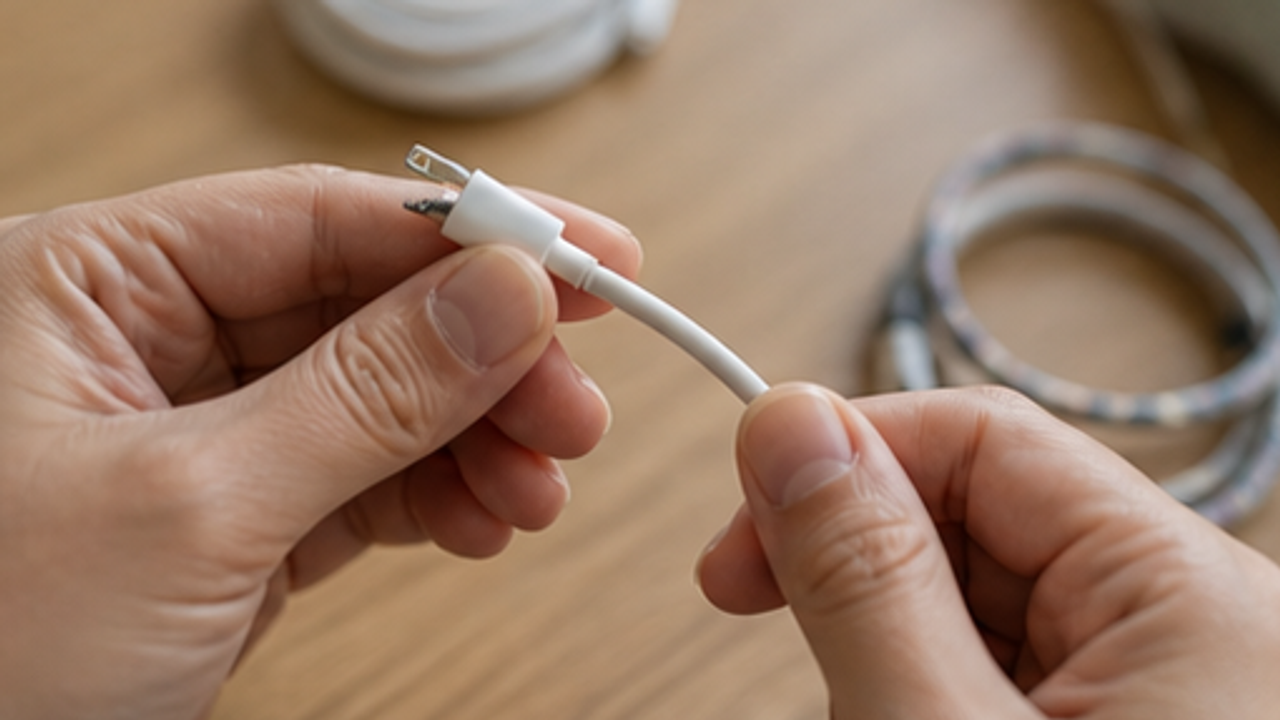
Look for cracked jackets, bent plugs, heat marks, or exposed wire.
Damaged cables can charge poorly and may be unsafe.
Do not keep using cables that are exposed, overheated, or clearly damaged.
Coil With Soft Loops
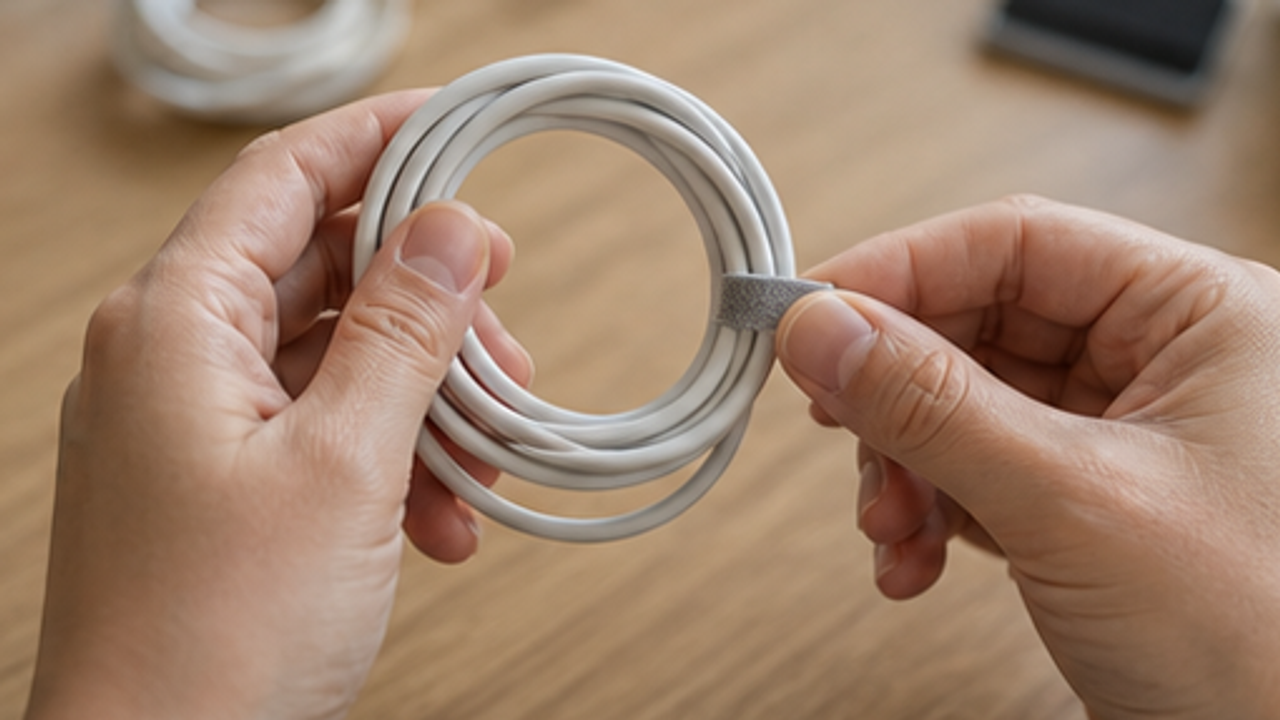
Coil each cable in a natural round loop without sharp bends.
Loose loops reduce pressure on internal wires and connectors.
Do not wrap cables tightly, especially near the plug.
Fasten With Reusable Ties
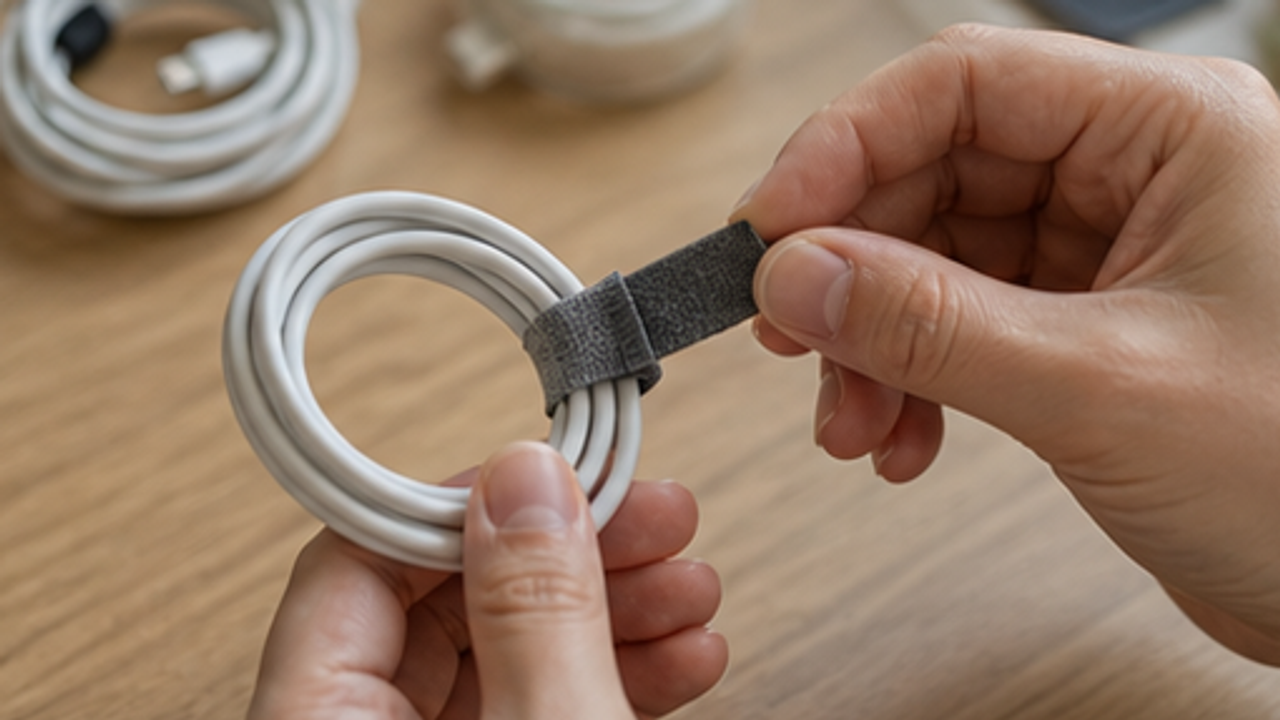
Use hook-and-loop or soft reusable ties to hold each coil.
Soft ties are gentler on cables than tight rubber bands.
The tie only needs to prevent unraveling, not squeeze the cable.
Keep Daily Cables Up Front
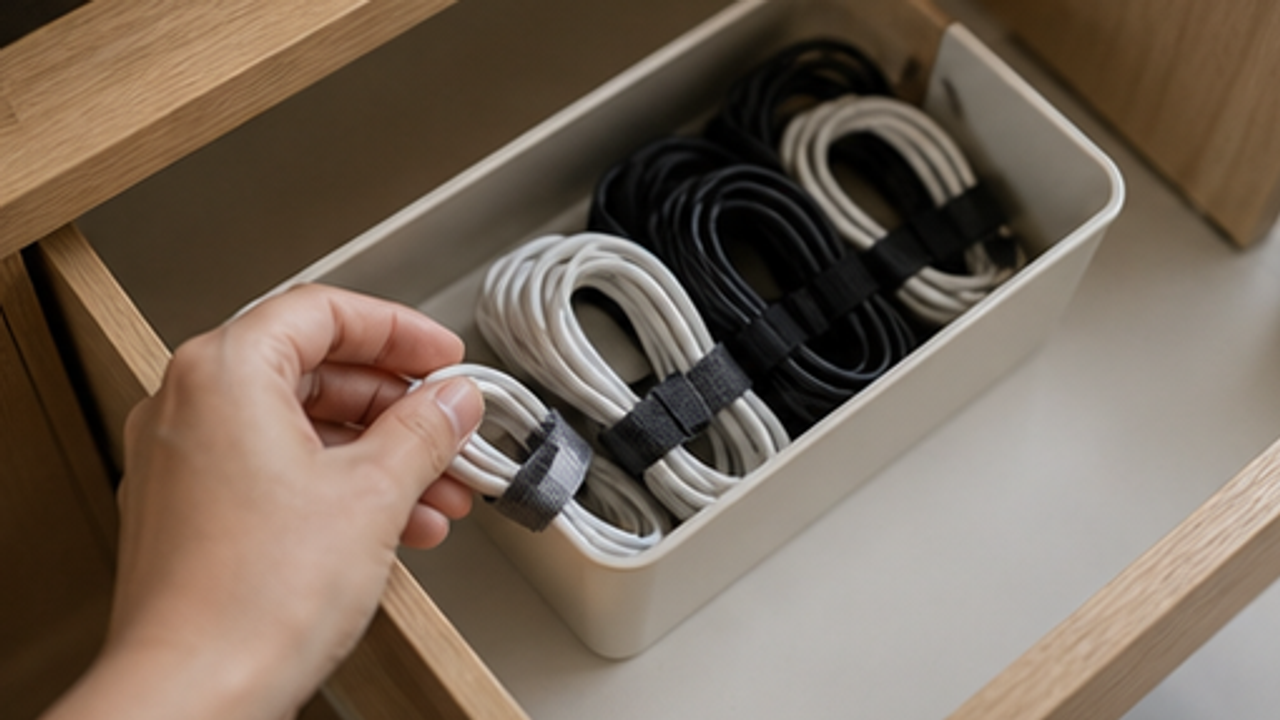
Place cables used every day in a front tray or small desktop box.
Easy access keeps you from messing up the whole storage area.
Do not cram daily cables tightly with power adapters.
Store Backups Separately
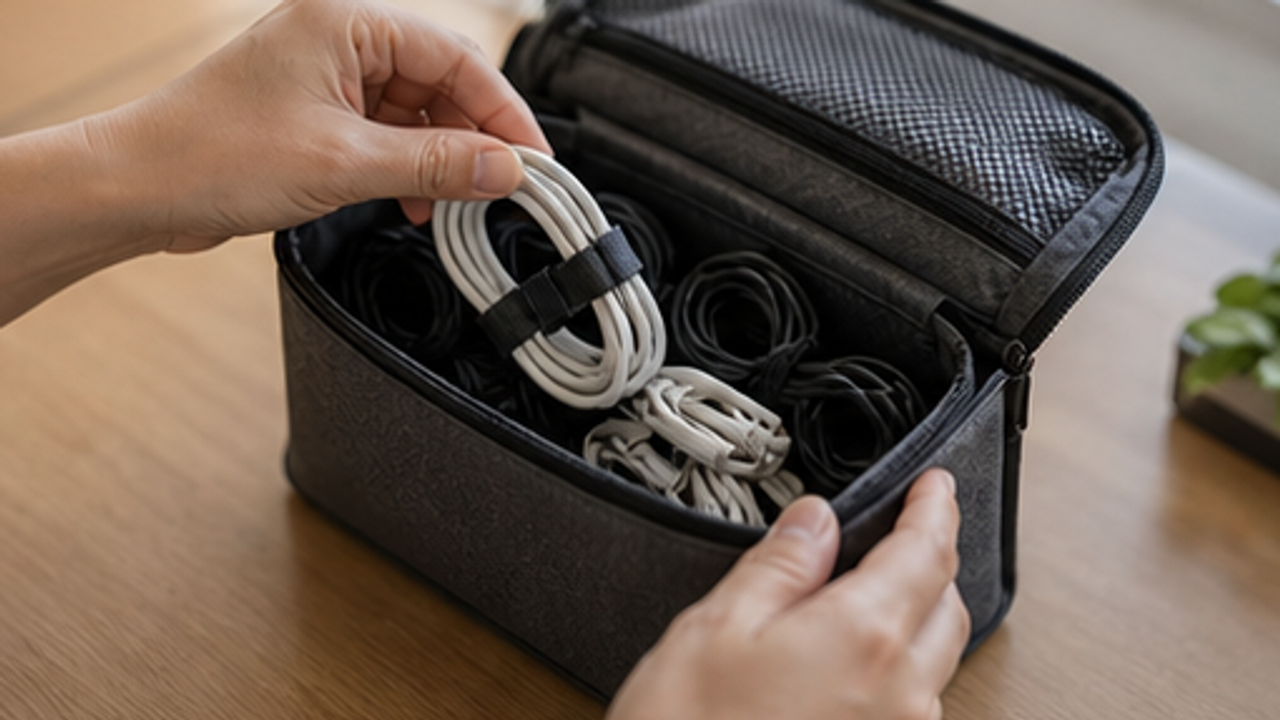
Place backup cables in a pouch, rear drawer section, or separate compartment.
Separating backups keeps the daily area simple.
Protect long-term cables from moisture and heavy pressure.
Test the Grab-and-Return
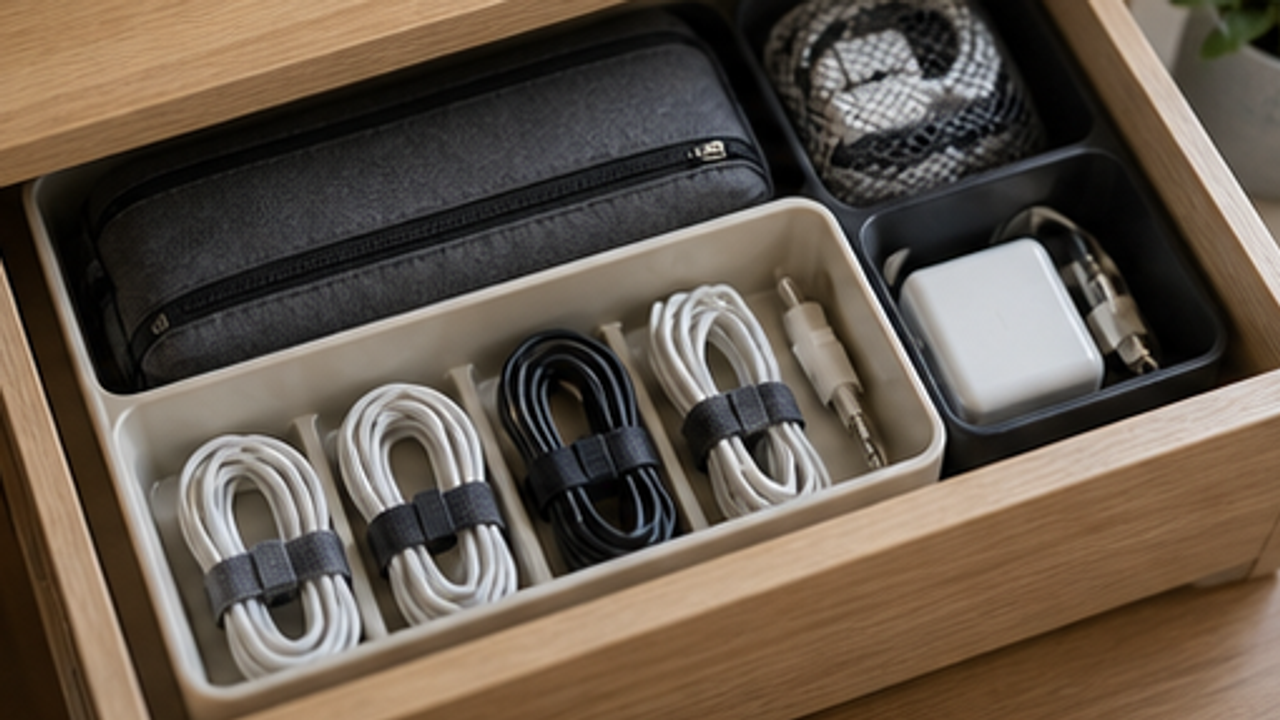
Take out one daily cable and put it back, checking that other cables do not come with it.
A reach test shows whether the system works in real use.
If cables still tangle, reduce the number per section or use a larger organizer.
Same topic
Related guides
Related guides
Home Organization
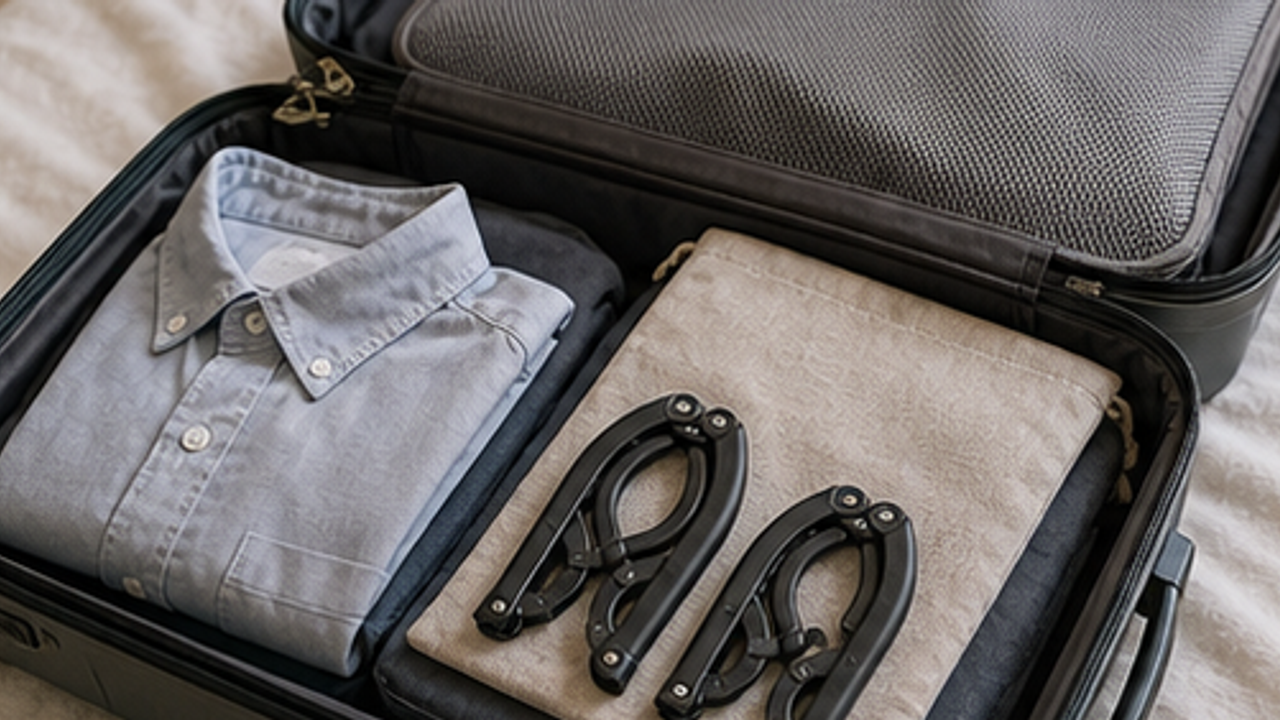
How to Prepare a Travel Folding Hanger Pouch
Give a travel folding hanger pouch one small fixed home so it is easy to use, return, and keep from spreading across drawers, shelves, or counters.
Home Organization
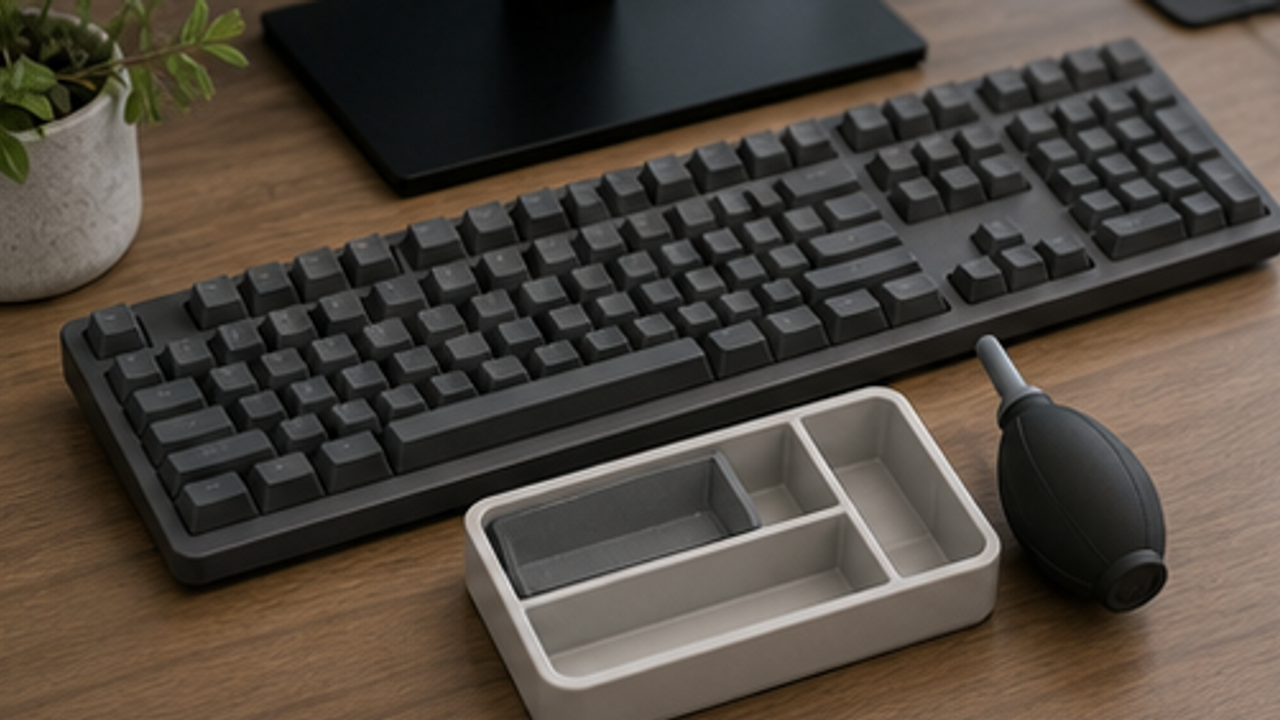
How to Set Up a Desk Keyboard Cleaning Brush Tray
Give a desk keyboard cleaning brush tray one small fixed home so it is easy to use, return, and keep from spreading across drawers, shelves, or counters.
Home Organization
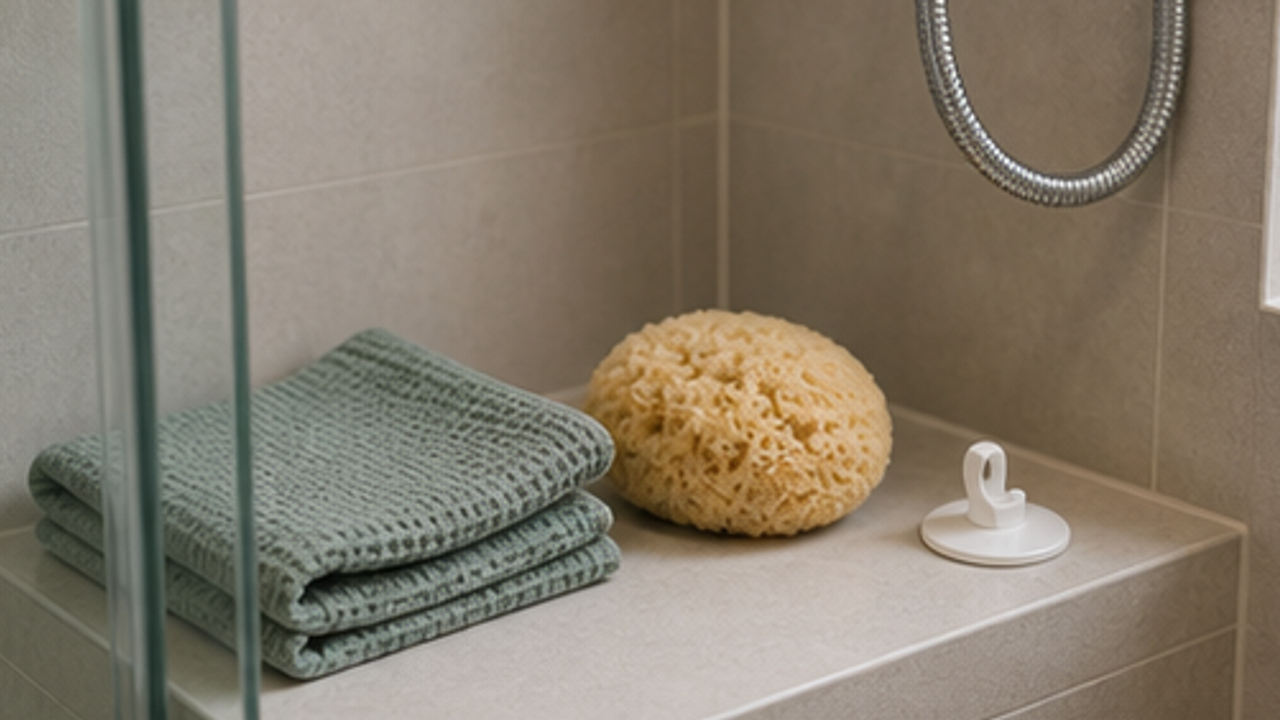
How to Set Up a Bathroom Bath Sponge Drying Hook
Give a bathroom bath sponge drying hook one small fixed home so it is easy to use, return, and keep from spreading across drawers, shelves, or counters.
Home Organization
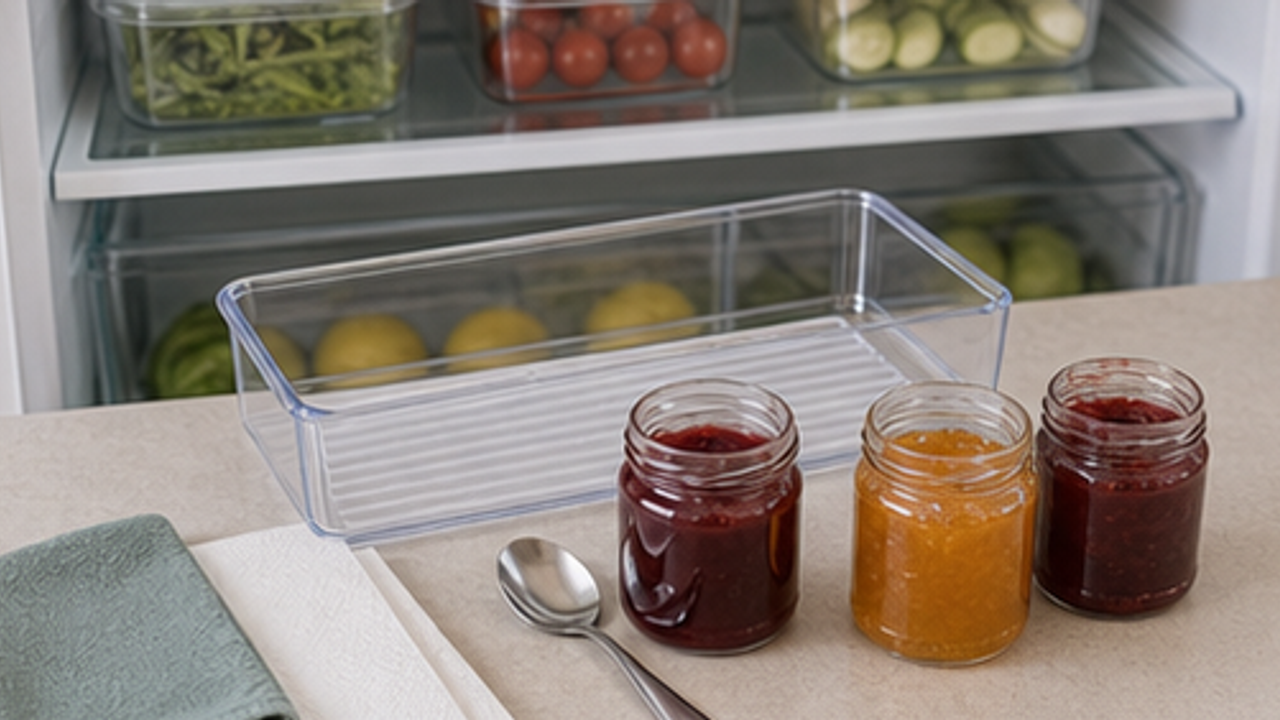
How to Organize Opened Jam Jars in a Fridge Front Bin
Give opened jam jars in a fridge front bin one small fixed home so it is easy to use, return, and keep from spreading across drawers, shelves, or counters.
More from this author
Open
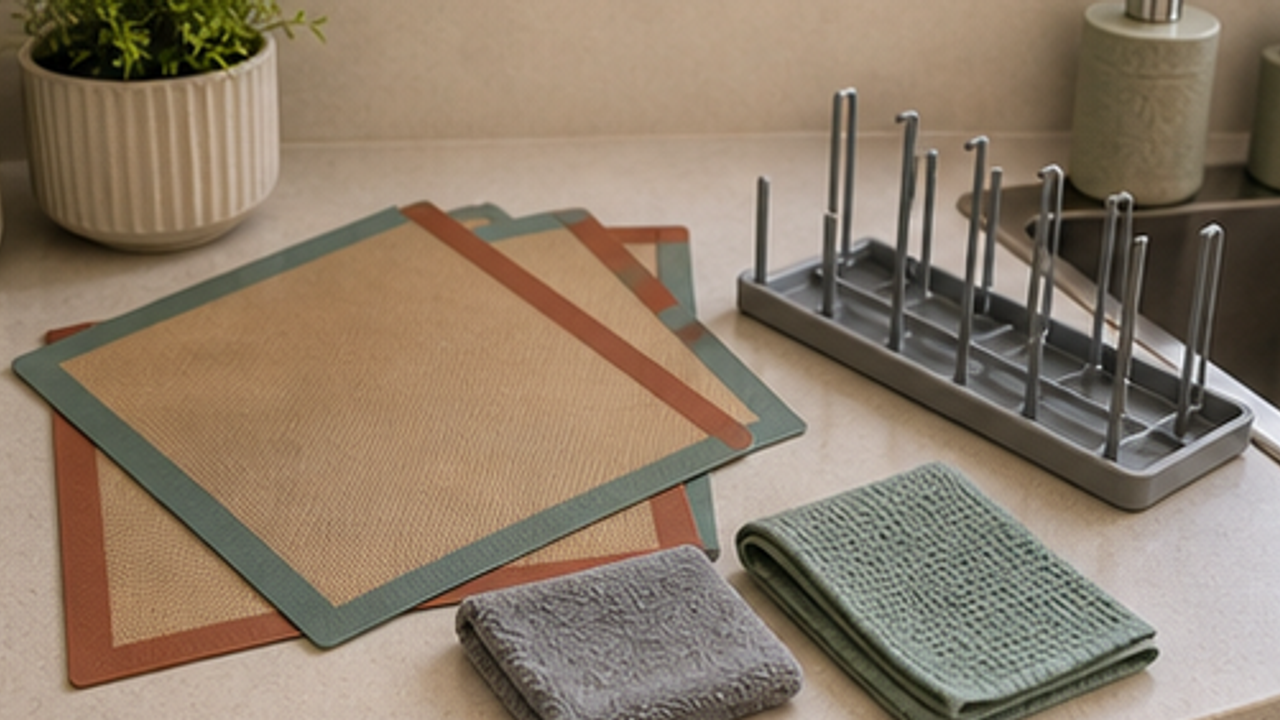
How to Set Up a Kitchen Silicone Baking Mat Drying Rack
Give a kitchen silicone baking mat drying rack one small fixed home so it is easy to use, return, and keep from spreading across drawers, shelves, or counters.
Open
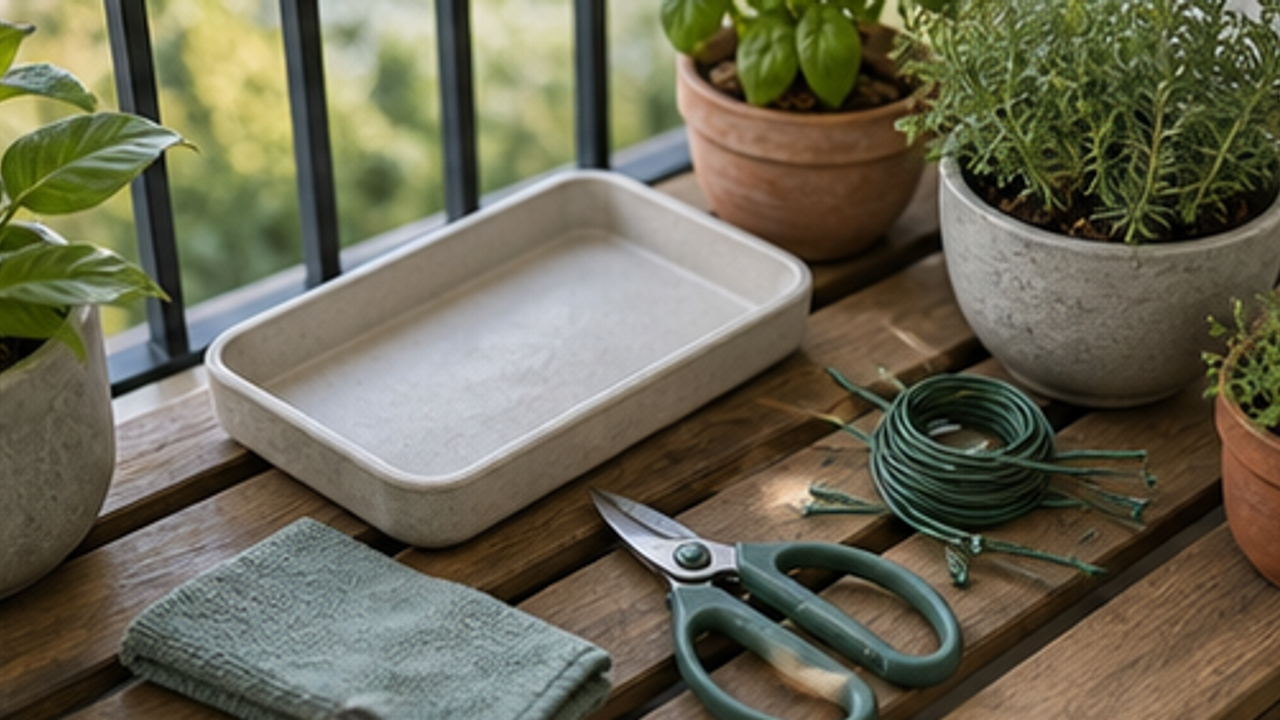
How to Set Up a Balcony Plant Pruning Tool Tray
Give a balcony plant pruning tool tray one small fixed home so it is easy to use, return, and keep from spreading across drawers, shelves, or counters.
Open
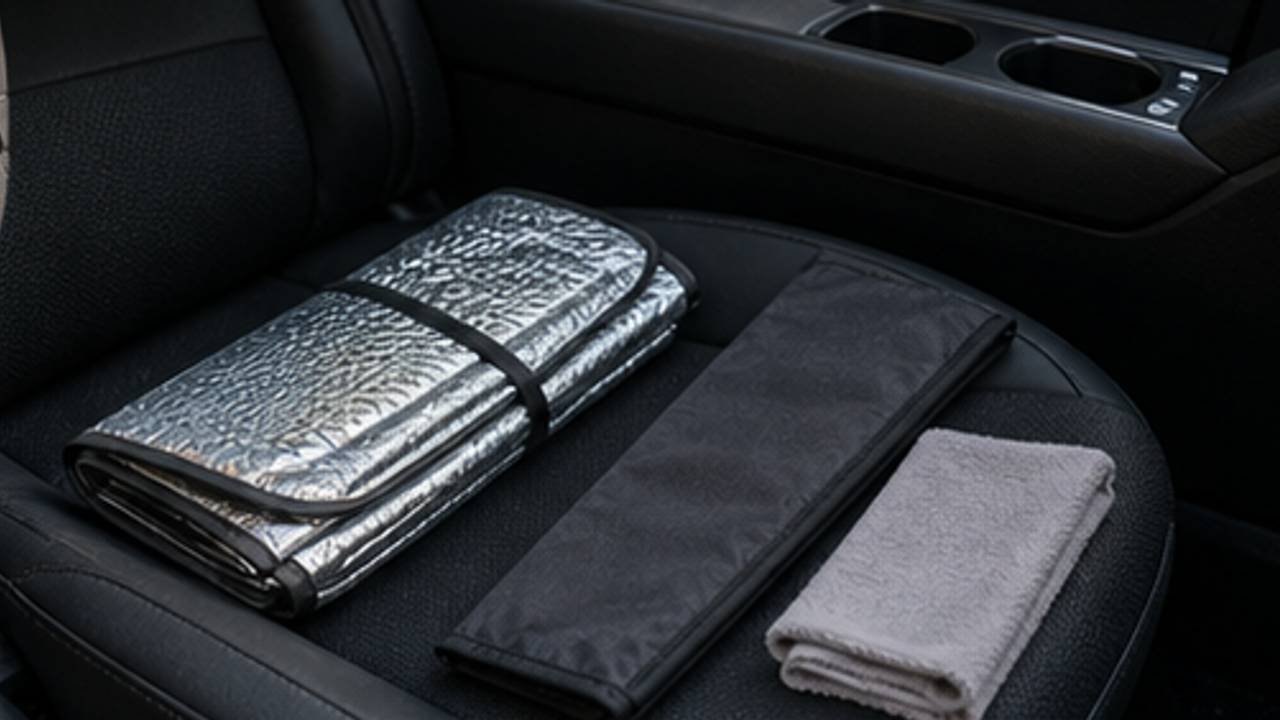
How to Organize a Car Folding Sunshade Sleeve
Give a car folding sunshade sleeve one small fixed home so it is easy to use, return, and keep from spreading across drawers, shelves, or counters.
Life Reactions
How this way feels to you
My Life Trial
Log it after trying
Comments
0 Comments
No comments yet.